WEB DESIGN

Shoelandia
Web

Improved redesign of Shoelandia website for better user experience and building trust and driving sales.

UI/UX Design
Figma
Dec 2022

OVERVIEW

Shoelandia is a new sneaker online concept space for footwear of all gender and age groups. It offers a range of footwear from flip flops, sport shoes, and everyday sneakers. The website offers products from brands such as adidas, Nike, Converse, and Vans.

The objective of this project was to improve the design of the website and experience of the customers by maximizing the strengths of the company which highlights the brands and the shoes delivered online. The problem that this project aims to address is the low consumer confidence in purchasing shoes online due to concerns about fit. Customers who wish to purchase item/(s) online should feel and experience a seamless and manageable process with clear understanding of the steps of shopping online.

BACKGROUND

An online shoe store may be a hit or miss to some customers who plans or wishes to purchase a pair of shoes online as they don’t have a tangible experience of the product to know whether it is worth the money they are investing into. It is important to the designer to be able to give that experience to the customers through the screen how the product feels and the quality assurance it can provide to the buyers.

An online shoe e-commerce website such as Shoelandia should provide a level of encouragement and assurance for customers to shop on the online shoe store and find solutions to address their concerns on providing an accurate and reliable sizing and fitting experience to their customers, which is crucial to building trust and driving sales, and overall increasing the number of successful online shoe purchases and improving the overall consumer experience. I was the sole designer and researcher on this project in charge of the web design.

UNDERSTANDING THE PROBLEM

A consumer survey conducted by Volumental recently states that 63 percent of their respondents expects to buy a pair of sneakers online. 20 percent of them are “not so confident or not confident at all” that the pair of shoes they bought online will fit them and 57 percent said they “have bought a pair of shoes online but had to return them because they did not fit”. Only 10 percent of the respondent were “extremely confident” that the footwear they bought online would fit. Seeing the statistics of the response from the survey, the main problem in shoe e-commerce is the lack of tangible experience user’s get when shopping online and how they can assure that the pair of shoes they bought online is the accurate and fitting size for their feet. I discovered that the pain points on this case is as follows:

  1. Difficulty in finding the right fit: As per the survey conducted by Volumental, a significant percentage of respondents had to return shoes purchased online because they did not fit properly. This highlights a major pain point for consumers who are hesitant to purchase shoes online due to concerns about the accuracy of sizing and fit.
  2. Lack of confidence in online purchases: The survey also revealed that a significant number of respondents lacked confidence in purchasing shoes online, with only 10% being extremely confident about the fit of the shoes they purchase. This lack of confidence can be a major barrier to online shoe sales, as consumers may prefer to purchase shoes in-store where they can try them on before making a purchase.
  3. Inconvenience and cost of returns: The survey found that 57% of respondents had to return a pair of shoes purchased online because they did not fit. This can be a major inconvenience for consumers who have to go through the process of returning the shoes, which can be time-consuming and costly in terms of shipping fees. This can also be a pain point for online shoe stores, as returns can be costly and impact their bottom line.

VISION AND SOLUTION

From the findings uncovered above, I decided that the vision and solution for this project are:
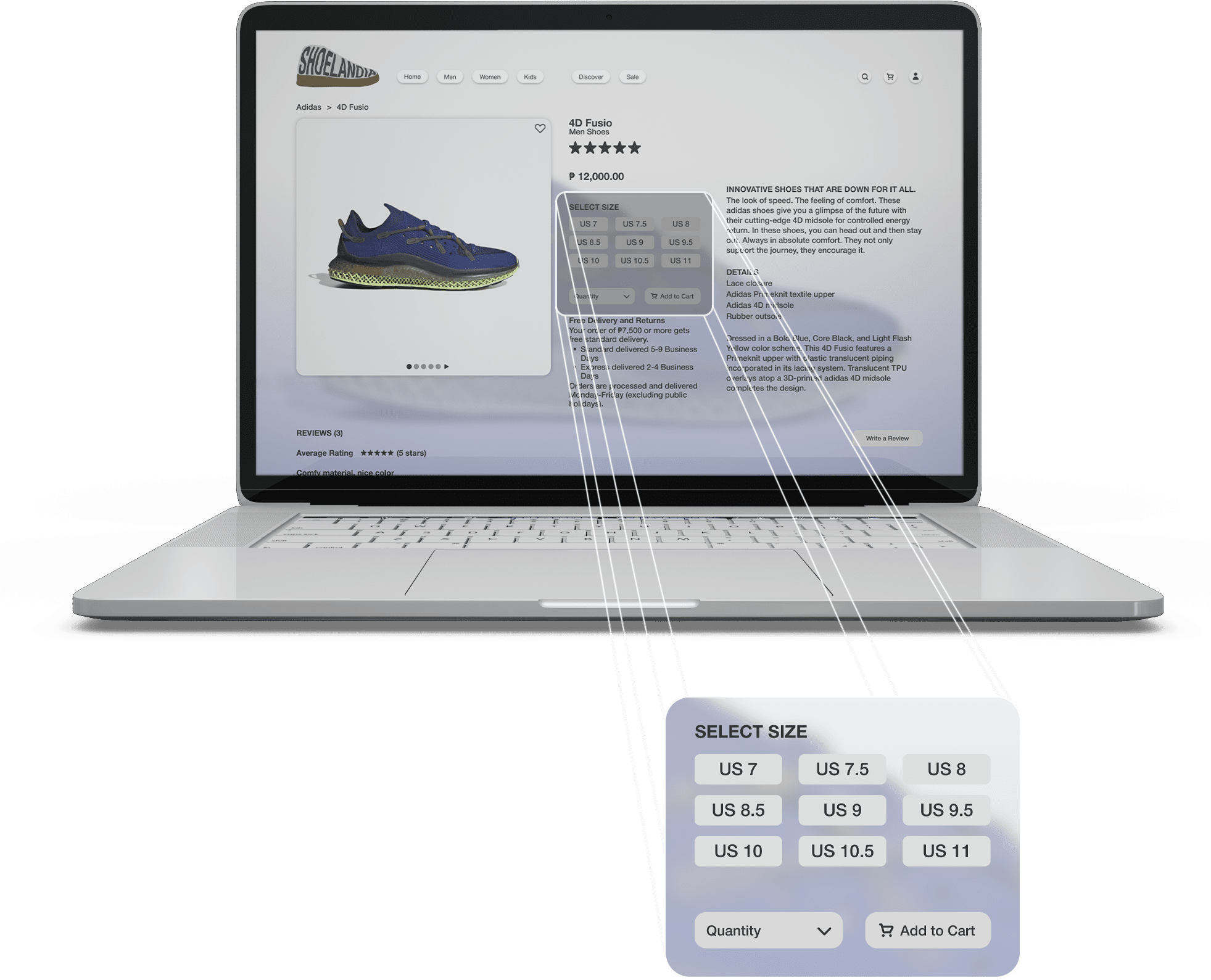
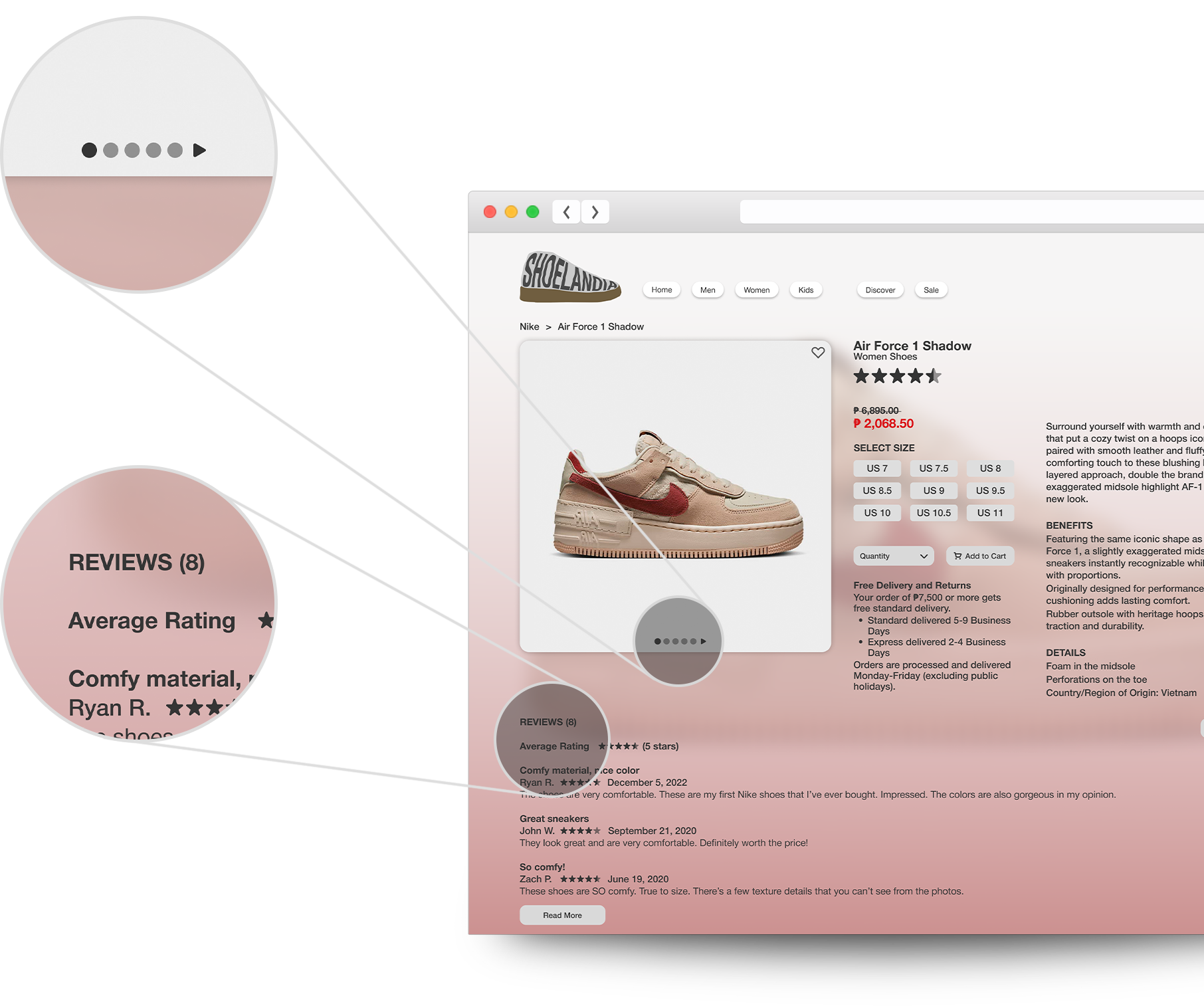
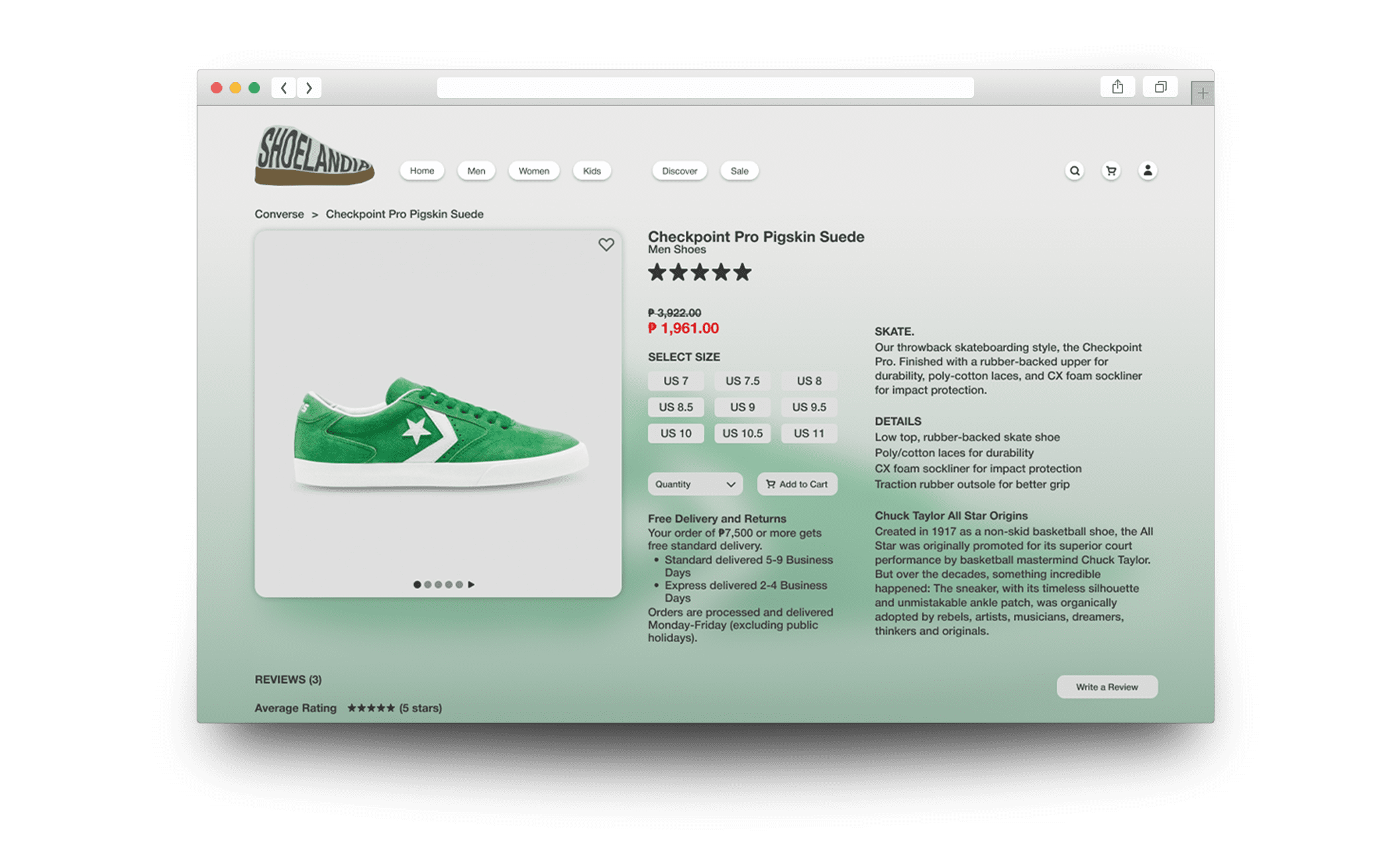
  1. Provide accurate and detailed sizing information on the product page.
  2. Offer a wider range of sizes to cater to customers with different foot shapes and size.
  3. Offer a generous return policy with free shipping and no-hassle returns to increase customer confidence.
  4. Provide customer reviews and ratings on product pages to give customers an idea of how the shoes fit and whether they are true to size.
  5. Show clear and large images of the products, taken from every angle of the product for customers to view and help in decision-making.
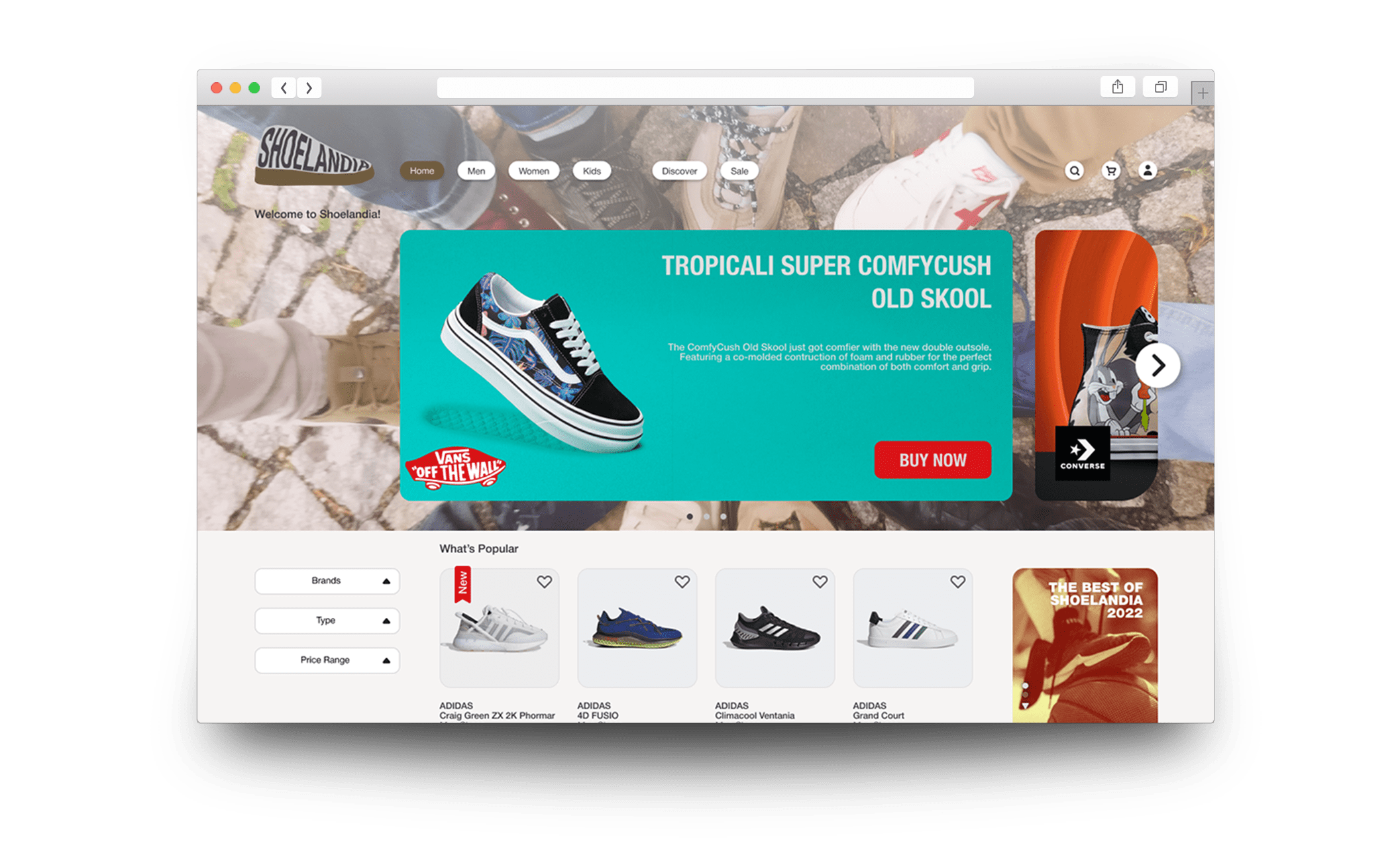
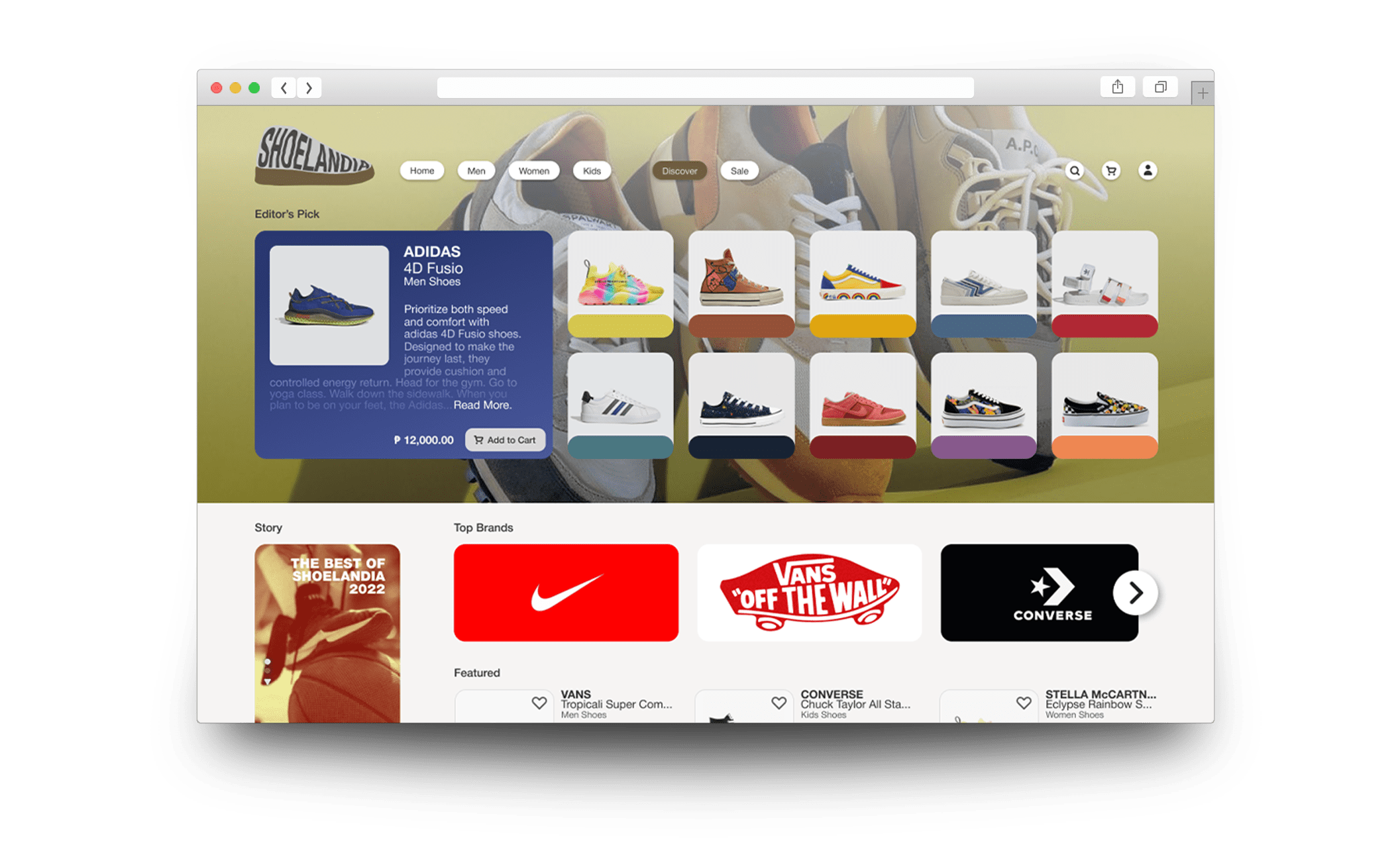
  6. Implement a system that allows customers to see the most popular and bestseller shoes on the website.

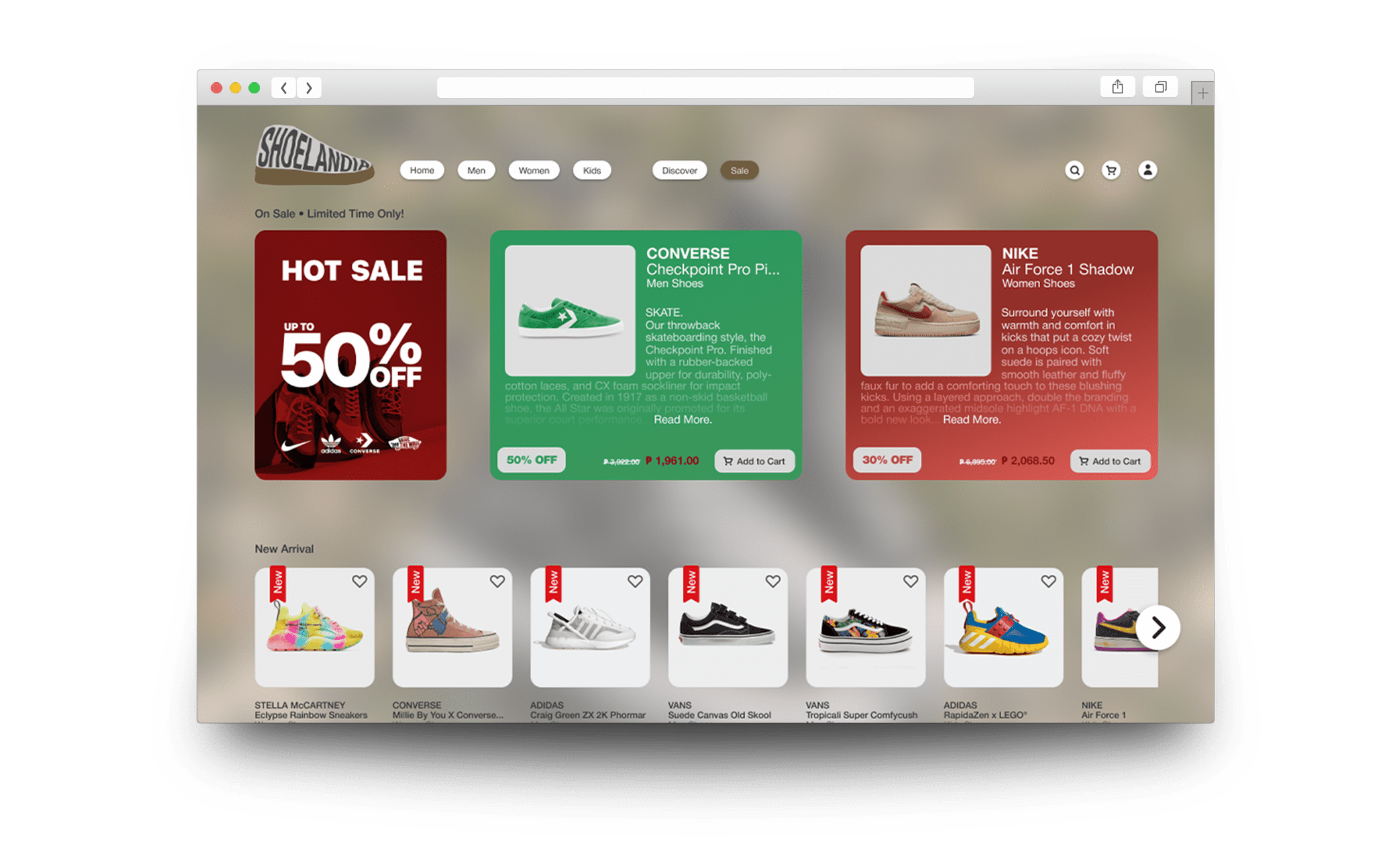
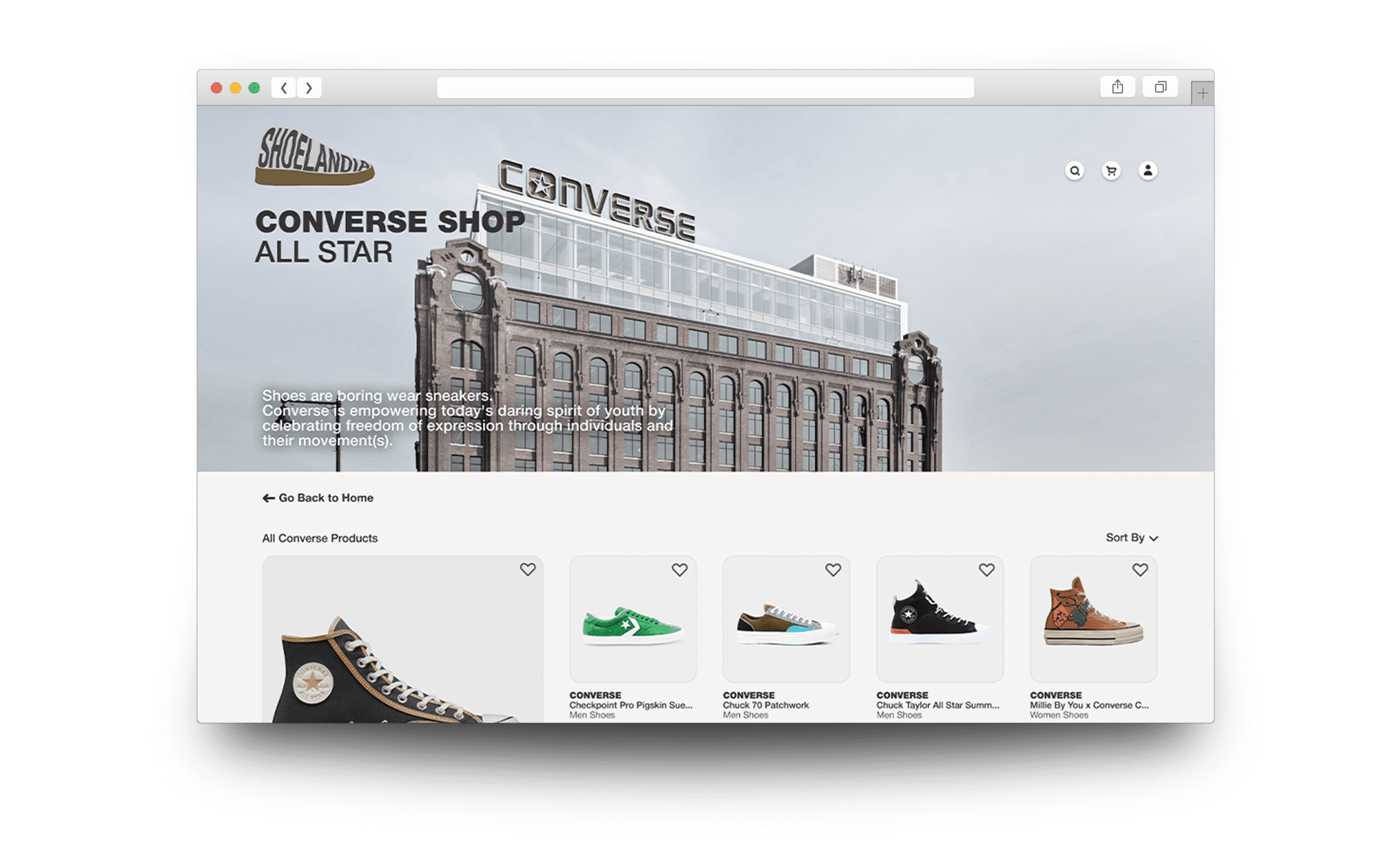
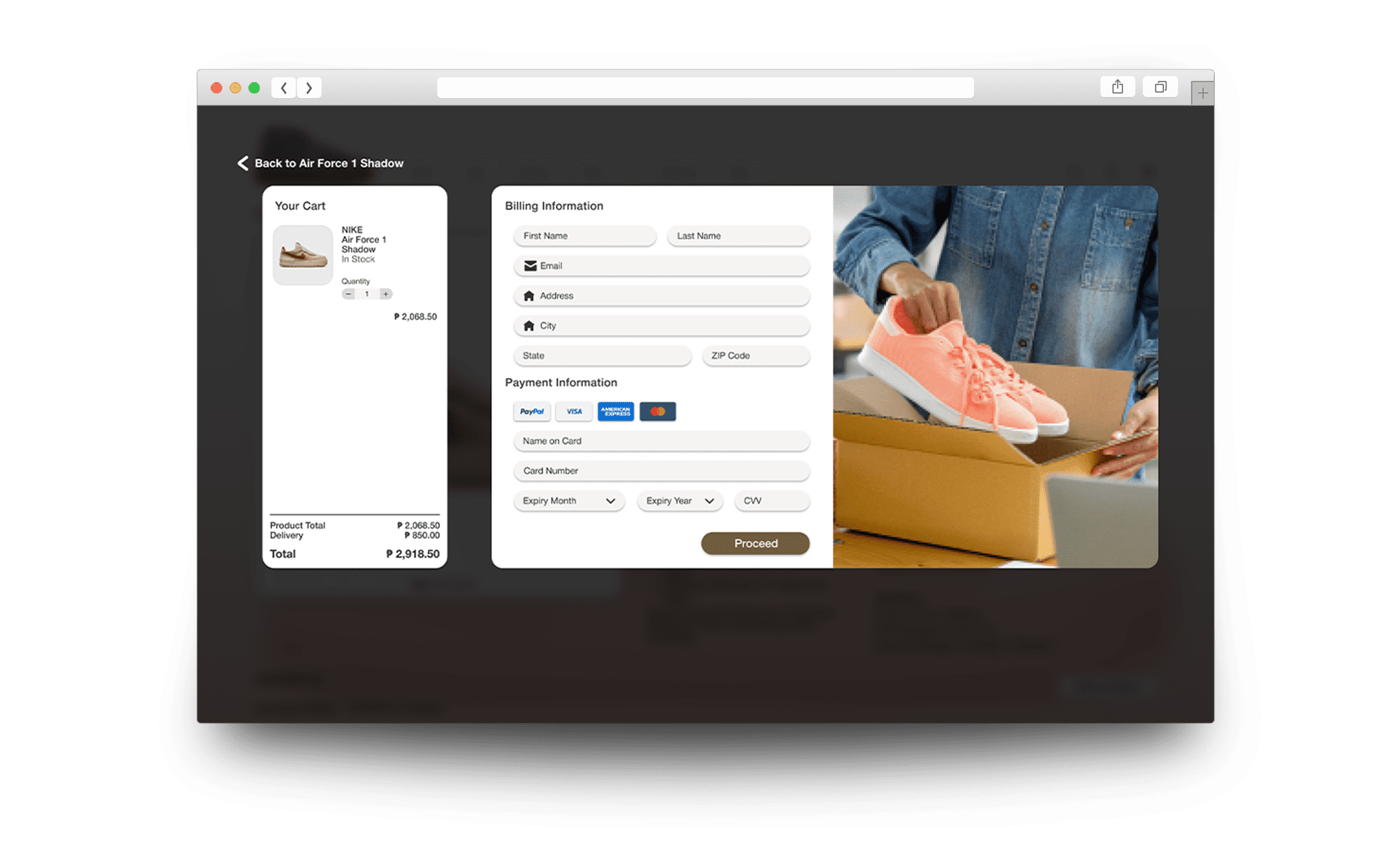
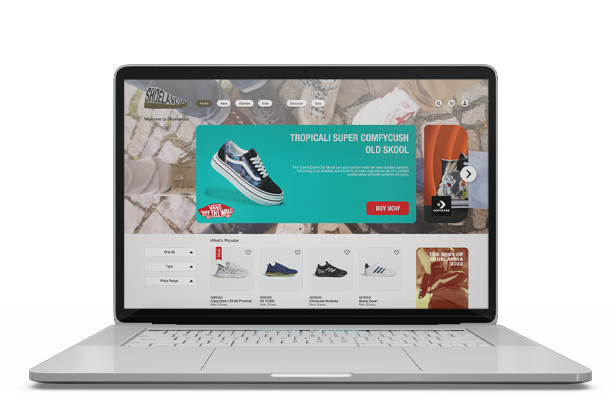
I started brainstorming the major screens to be designed for the website such as the Home Screen and the Shopping Cart, and the contents that will be placed on each screen. Next, the components and functionalities of the online shoe store. Since there will be a system that allows customers to see the bestselling shoes, components will have to be utilized for shoes to be showcased by categories and purpose (e.g. Sportswear, Lyfestyle, Editor’s Pick).

DESIGN

This whole process was done over the span of four months. As the sole designer and researcher, I have to make all the decisions and do heavy research on what is the most convenient and less time-consuming method to undertake this design. I opt for a modernized look because not only is it less intricate, it is also less straining to the eyes of the user. Also, a modern web design can also prevent an outdated look for a website especially in a time where technology evolves so fast. For better user experience, I ensure that there is less animation featured (and if there are, only minimal and seamless transitions) to maintain a healthy load time. Longer load time loses web visitors and incorporating many animations and long transitions affects the load time. Therefore, optimizing the transitions and animation help load the website faster.

TAKEAWAYS

With this project, I realized:​

  1. Sorting solutions that will solve the problem is always helpful especially when you have so many ideas on how to tackle a problem. Writing it in sticky notes is way efficient and a big help later when you try to connect each note to the other with a yarn string.
  2. Your assumptions always need to be challenged and tested. I assumed that the best way to solve the shoe size problem is by using high end technologies such as 3D scanning or foot mapping, after doing more researching I found out that providing more informative sizing information on every product page is another way of tackling the problem.

Check out the interactive prototype of Shoelandia through this link.
Other Projects